
What happens when someone is blamed without proof? The Ifk incident shows how truth can overcome a painful ordeal.
When the beloved wife of the Mercy of the Worlds, the respected jurist, devoted worshipper, and scholar, Sayyida Aisha (RA), faced this allegation, she turned to Allah with complete trust, knowing that He alone knew the truth of her heart and intentions.
Al-Ifk: How the Slander Began
Al-Ifk refers to a serious moral and social crime: the spreading of a baseless and malicious claim. This infamous incident in 5 AH, or the 6th year after Hijrah, occurred during the return from the Battle of Banu Al-Mustaliq.
The Prophet Muhammad (صَلَّى اللَّهُ عَلَيْهِ وَسَلَّمَ) was returning to Madinah with his companions. The Prophet ﷺ would sometimes take some of his wives with him on journeys.
During this expedition, he chose Hazrat Aisha Radi Allah Anha to accompany him after drawing lots. (Sahih al-Bukhari, Kitab al-Maghazi, Hadith 4141)
Aisha (RA) and the Lost Yemeni Necklace
The caravan stopped for the night. Mother of the Believers, Aisha (RA), went away from the camp to relieve herself.
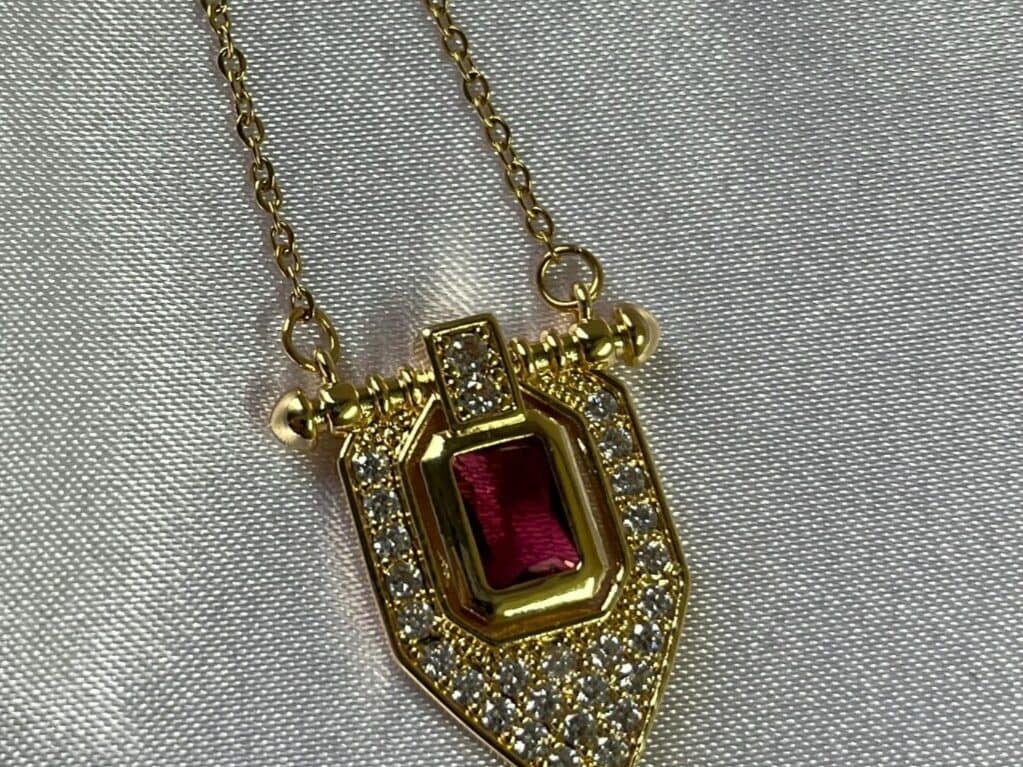
Upon returning, she realized she had lost her precious Yemeni necklace, which was very dear to her.
She went back to search for it. In the meantime, her attendant assumed she had already entered her howdah (the covered carriage on a camel), and the caravan members thought the same. Thus, the caravan departed without her.
When she returned, she found the caravan had gone. She was left alone in the deserted area. Trusting that the caravan would return for her once her absence was noticed, she decided to wait there.
Aisha (RA) and Safwan: Rescue After the Lost Necklace
When Safwan (RA) spotted Aisha (RA) sitting alone in the vast, silent desert, a wave of concern washed over him.
He exclaimed, “Inna lillahi wa inna ilayhi raji’un.” “Verily, to Allah we belong, and to Him we shall return.”
His words were full of shock and worry, realizing she had been left behind in such a lonely and desolate place.
It was a natural expression of fear for her safety, while also recognizing that everything belongs to Allah, and He alone protects His servants.
Aisha (RA) quickly veiled herself. With care and respect, Safwan (RA) helped her onto his camel while he walked beside it, holding the reins.
Who started the Slander of Aisha in Ifk
Among the people in the caravan was Abdullah bin Ubayy bin Salul, a prominent hypocrite in Madinah whose heart was filled with envy and bitterness.
As Islam grew, he felt his tribal prestige and influence slipping away. Moreover, the love and respect the Prophet ﷺ received only deepened his resentment.
Unable to accept this change, he struggled to see the Messenger ﷺ and his household honored by the people of Madinah.
Hypocrites’ Rumors and Aisha (ra)’s Trials
When he saw Aisha (RA) and Safwan (RA) together, he seized the opportunity he seized the moment to launch a baseless attack on the honor of the mother of the Believers, hoping to create doubt, chaos, and opposition against the Prophet ﷺ.
The rumor spread through Madinah like wildfire. Even some Muslims were influenced and began repeating the false accusation.
Slander affects through words; unseen envy has an impact. 👉 What is the Evil Eye?
Upon hearing about the slanderous claims, Aisha (RA) fell severely ill and remained unwell for one month.
Overwhelmed with grief, she sought permission from the Prophet ﷺ to recover at her parents’ home, where she stayed during that difficult period.
Surah An-Nur Revelation (Verses 11–26): The Innocence of Aisha (Radi Allah Anha)
The Prophet ﷺ was deeply distressed. He rose in the mosque, his voice heavy with pain, and addressed the people:
“O, people! Who will stand with me against those who harm my family? I know nothing but good about my household.”
(Sahih al-Bukhari, Kitab al-Maghazi, Hadith 4141)
The Malicious allegation pressed upon his heart like a weight of unbearable anguish, a trial not only for Aisha (RA) but for the entire community.
Yet Allah, in His infinite love for His beloved Prophet ﷺ, never left him alone in suffering.
Divine Testimony and the Prophet’s ﷺ Smile: Aisha’s (RA) Vindication
Umm al-Mu’min said:
“I was hopeful that Allah (SWT) would declare me innocent and affirm my purity and chastity. Yet, it never crossed my mind that Allah would reveal a wahey (divine revelation) concerning my situation; I did not deem myself or my affair worthy of such an honor.
My only expectation was that perhaps the Messenger of Allah ﷺ might receive a dream through which my innocence and integrity would be testified.”
A woman stands in a serene desert, embodying hope and faith as she gazes towards the horizon.
“Behold the kindness of Allah, the Prophet ﷺ had not even risen from where He sat when, all of a sudden, the signs of revelation appeared.
The intensity that usually accompanied such moments began. So profound was the state that blessed pearls of perspiration shone upon his noble forehead.
Even in winter, the weight of revelation would cause him to sweat; such was the gravity of the Divine Words descending upon him.”
“Shortly after, when the Blessed Prophet ﷺ emerged from the state of wahey, He was smiling. The very first words he spoke were:
‘O Aisha Siddiqah! Allah, the Exalted, has declared you free from blame and purified you. He has proclaimed your innocence from this accusation and revealed verses of the Qur’ān in your honor.’”
References:
(1) Madārij al-Nubūwwah (Urdu), Vol. 2, p. 283
(2) Khaṣā’iṣ al-Kubrā (Urdu), Vol. 1, p. 454
Lessons from Aisha’s (RA) Faith in The Event of Ifk
Hazrat Aisha Siddiqah (RA) added:
“At that time, revelation was sent down beginning with:
إِنَّ الَّذِينَ جَاءُوا بِالْإِفْكِ عُصْبَةٌ مِنْكُمْ
(Sūrah an-Nūr, 24:11, Juz 18)
“Indeed, those who have brought forth the falsehood are a group from among you… up to ten verses. In total, eighteen verses testified to my faultlessness; these ten, along with eight others.”
The Prophet ﷺ and his Companions: Upholding Integrity Amid Slander
At that critical time, the prominent companions Ali ibn Abi Talib (RA) and Usama ibn Zayd (RA) firmly defended the chastity and character of Aisha (RA).
The Prophet ﷺ consulted his companions.
Hazrat Usama bin Zaid (RA) defended her, saying, “O Messenger of Allah, we have only seen good in Aisha.”
(Sahih al-Bukhari, Kitab al-Shahadat, Hadith 2661)
Hazrat Umar Farooq (RA) said about The Falsehood of Ifk
“The hypocrites are certainly liars, and Umm al-Mu’minin is certainly pure. Allah Almighty protected the blessed body of the Crown of Prophethood (ﷺ) from flies landing on it, since they often sit on impurities, so how is it possible that He would not protect Him (ﷺ) from the company of an unchaste woman?”
Hazrat Uthman Ghani (RA) also affirmed her purity in this manner and said:
“Allah Almighty did not allow the shadow of the Prophet (ﷺ) to fall upon the ground, so that no one would step upon it.
So how could the Lord, who protected even the shadow of the Prophet (ﷺ), not protect the members of His household?”
Hazrat Ali Murtaza (RA) said:
“When even a louse’s blood stained the Prophet(ﷺ), the Lord of the Worlds commanded him to remove his shoes.
So how could the Lord, who did not tolerate such slight impurity on the blessed shoes of the Prophet (ﷺ), tolerate impurity in the members of His household?”
(Reference: Madarik, Surah An-Noor, under Verse 12, Page 772, summarized)
The Sacred Pause: Wisdom Behind the Prophet’s ﷺ Silence
Since this painful situation involved the family of the Prophet Muhammad ﷺ, he chose to remain silent. However, his silence did not mean he doubted Aisha’s (RA) character. He knew she was innocent, yet he patiently waited for Allah’s decree.
Moreover, if he had declared her innocent based only on his personal knowledge, the hypocrites could have accused him of favoritism or claimed he was protecting his family.
Likewise, Abu Bakr (RA) remained quiet, trusting that Allah would reveal the truth at the right time. Even Aisha (RA) did not try to defend herself publicly. Instead, she placed her trust in Allah and waited for His wisdom and judgment.
Translation (Kanzul Iman):
“And why did it not occur to you, when you heard it, to say: ‘It is not for us to speak of this. Glory be to You (O Allah)! This is a great slander?”
The Fate of the Hypocrites
- The main liar faced consequences.
- Cleared Hazrat Aisha’s (RA) name completely, proclaiming her purity.
- The slanderers were firmly held accountable and faced consequences according to Islamic law.
- Believers were instructed to avoid Groundless suspicions and spying.
False Accusations in Islam: Lessons from the Event of Ifk
Placing a false claim on someone is a serious sin in Islam and strictly forbidden.
- Hazrat Ali (RA) said:
- “Accusing innocent people is heavier than the skies,” meaning it is a major sin.
- Another narration explains:
- Whoever spreads a lie or harmful rumor about someone, knowing it has no basis in truth, risks Allah’s punishment in Hell.
- If the person repents and stops this action in this world, Allah may forgive them.
- References:
- Musnad Ahmad: 7/204
- Sunan Abi Dawood: 3597
- Takhrij Mishkat al-Masabih: 3/436, 3542
When Truth Wins: The Lasting Lesson of Ifk
This historical story teaches us a powerful lesson: no matter how many schemes are made against someone with a clean heart, Allah does not abandon those who remain sincere and upright.
In the end, truth has a way of coming to light.
Share your thoughts in the comments section below.
جَزَاكَ ٱللَّٰهُ خَيْرًا
Leave a Reply